
Serengeti Migration safari

Experiences

The Great Wildebeest Migration

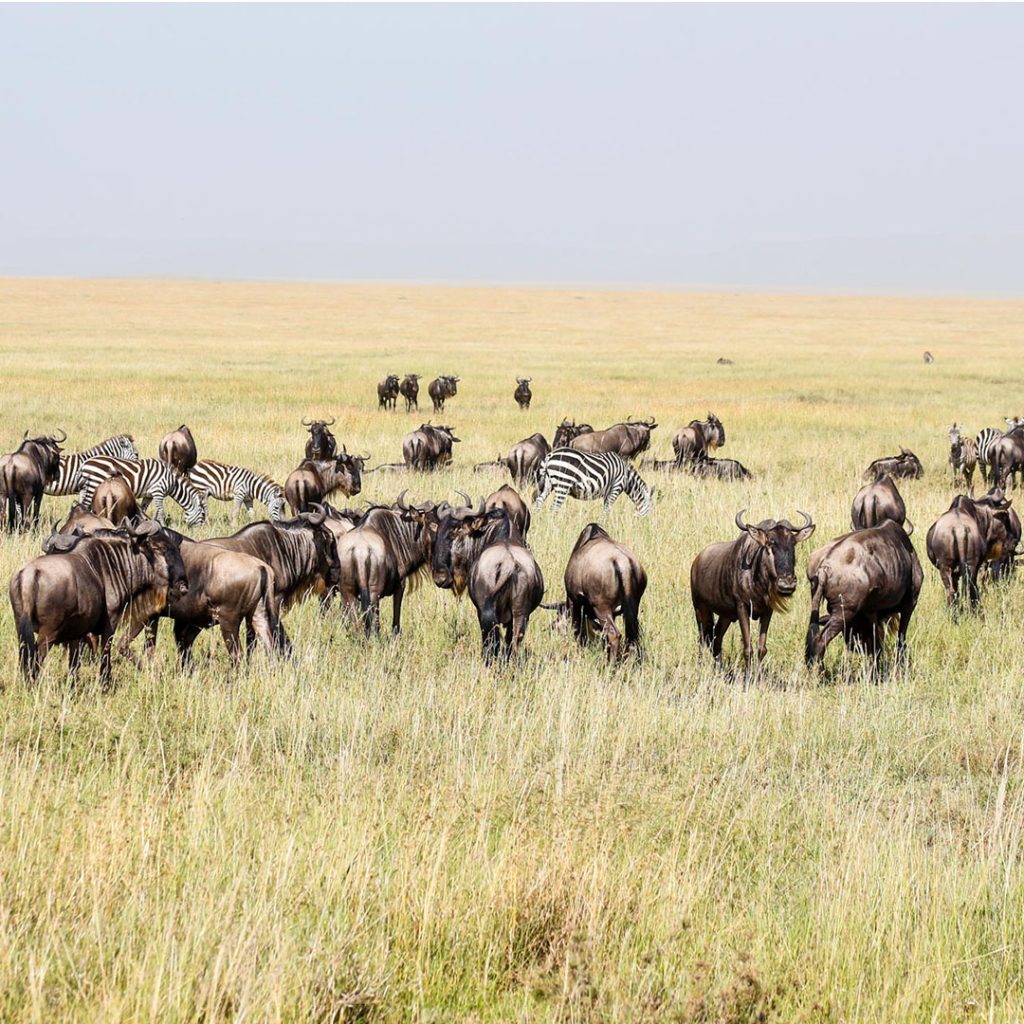
The Great Wildebeest Migration unfolds across East Africa within the remarkable Serengeti Mara ecosystem, one of the oldest natural systems of its kind still in existence. Spanning northern Tanzania and southern Kenya, this vast landscape includes protected areas such as Serengeti National Park, the Ngorongoro Conservation Area, and the Maasai Mara National Reserve. Although the migration crosses borders, most of the movement takes place within the Serengeti, where wide open plains create the perfect stage for this incredible natural event.

Covering about 40,000 square kilometers, this ecosystem supports millions of animals, including wildebeest, zebras, gazelles, and powerful predators such as lions and cheetahs. Its rich mix of habitats, from rivers and wetlands to grasslands and forests, allows wildlife to thrive throughout the year. The migration follows the rhythm of nature, as dry conditions push herds to move while seasonal rains lead them to fresh grazing areas. These fertile plains become a safe place for calves to be born, yet survival is never guaranteed since predators and scavengers are always nearby.
Experience & Enjoy

Our Migration trip inspiration

You are welcome to tailor our trip options to your own interests. While these carefully chosen ideas will serve as a starting point, keep in mind that your path will be entirely unique to you.

5 Days Tanzania Fly-In Migration Safari
5 days25
3
5 by 2 reviews
  • Location3.5
  • Price5
Ngorongoro | Serengeti
$ 1,920
Explore
5 Day Great Migration Safari In Tanzania
5 days25
3
5 by 2 reviews
  • Location3.5
  • Price5
Nothern Circuit
$ 2,320
Explore
4 Days Serengeti Migration Safari
4 days25
4
5 by 2 reviews
  • Location3.5
  • Price5
Nothern Circuit
$ 2,200
Explore
6 Days Tanzania Budget Camping Safari
6 days25
3
5 by 2 reviews
  • Location3.5
  • Price5
Nothern Circuit
$ 3,415
Explore
3 Days Mid Range Wildlife Safari
3 days25
3
5 by 2 reviews
  • Location3.5
  • Price5
Nothern Circuit
$ 1,495
Explore
5 Days African Classic Safari Journey
5 days25
3
5 by 2 reviews
  • Location3.5
  • Price5
Ngorongoro | Serengeti
$ 2,135
Explore

Why do wildebeest migrate?

The wildebeest migration is a powerful example of nature in motion, guided by the constant search for water and fresh grazing land. Taking place mainly within the Serengeti Ecosystem, this yearly movement closely follows seasonal rains that bring new grass to life. As dry conditions set in and food becomes scarce, the herds move toward areas where rainfall has recently fallen, ensuring they have enough to eat and drink.

This ongoing journey is essential for their survival, as it supports breeding and calving during the most favorable conditions. At the same time, the migration plays an important role in protecting the environment by reducing pressure on a single area. By constantly moving, the animals allow the land they leave behind to recover, helping maintain a healthy and balanced ecosystem.

The Great Migration month by month

DECEMBER – APRIL

We can find the main calving grounds in the area southeast of Seronera: typical Serengeti plains stretch all the way to the Ndutu area near Ngorongoro. Triggering their move to this area are the short rains in November and December. The wildebeest stick around this area until the end of the long rains, end of April, early May. The delightful news is that this section of Serengeti National Park is easily accessible and that in this period the landscape becomes lush.

February is usually calving season in the Ndutu area and the southeastern plains: the very best time to visit this area. As wildebeest, zebra and other ungulates are so many, and give birth to so many calves, the spectacle works as a magnet for predators. As early as March or April the herd may move again in search of greener pastures. Seeing the actual migration in this period is more difficult, but chances are that you will encounter very large herds on the move.

MAY – JULY

This is the period that the wildebeest, after having feasted on the short green grasses of the southeastern Serengeti and after having giving birth to their offspring, start getting ready for their 800-kilometer-long trek. The actual starting date may be anytime between late April and early June. This is the time to you may have the privilege to see one of the greatest natural phenomena in the world: more than a million marching animals in a column up to 40 kilometers long.

During the migration, the herd will move towards the Western Corridor, where they will face the first major obstacle: crossing the Grumeti River. Many animals don’t survive the crossing as they are being awaited by the area’s population of oversized crocodiles ready to feast. The herd may congregate on the southern bank of the river and stay there for up to two weeks before crossing the river.

AUGUST – SEPTEMBER

When the Grumeti River obstacle has been taken, the herd moves further north and starts crossing the next big hurdle, the Mara River, in July or August. The Mara River crossing is where so many iconic Great Migration photos have been taken. After this crossing the herd flocks to the northwest plains and Masai Mara National Reserve in Kenya. The August – September period is considered being a bad time to visit Serengeti National Park and see the Great Migration as the herd moves into the Masai Mara in Kenya.

However, migration patterns show that about half of the herd stays on the Tanzanian side, in the Mara Serengeti area. In this period, smaller herds of wildebeest (well consider small… herds may count up to between 500 and thousands of individuals) frequently cross the Mara River, back and forth, for no apparent reason. This is an excellent time to stay at one of the Serengeti Mara camps.

OCTOBER – NOVEMBER

Crossing the Mara River northbound means that, at one point, the herd needs to cross the river one more time before commencing the trek back in a southerly direction. This usually happens in October, but sometimes earlier. In this period the herd will cross the northern plains and Lobo area. This section of Serengeti National Park is little-visited, so if you are looking to see the migration in relative quietness, this would be the time. The wildebeest return to the short- grass plains and calving ground around Ndutu in late November. And from here, the Great Migration starts all over again.

The Great Wildebeest Migration Map

Why Aloito Safaris

Prime Destinations

We offer you seamless access to Africa’s most breathtaking destinations, including Tanzania.

Expert Local Guides

Guides with 10+ years of experience. Not just experts, but storytellers of the wild.

Trust & Safety

Your journey is financially protected and your safety is our silent, constant priority.

Unmatched Value

We guarantee the best price for a lifetime experience, making the extraordinary accessible.

Login

Were the expert judge of leisure, luxurious and custom made holidays. Your travel concierge among our team will take a personal yet very discreet approach to understand your heart felt desires, needs and aspiration to ensure that we surpass your expectations in rendering and delivery of services.

Address

Street, Majengo 25104

Phone

Email