Mount Kilimanjaro offers one of the most unique trekking experiences in the world, not only because of its towering height and dramatic ecological zones, but also because of the way accommodation is structured along the route. Unlike traditional mountain lodges or hotels, staying on Kilimanjaro is part of the adventure itself. Your “rooms” are either mountain huts or high-altitude campsites, both designed to support climbers as they ascend through vastly changing climates.
Understanding your accommodation options on Kilimanjaro is essential for preparation, comfort, and choosing the right route for your trekking style.
Mountain Huts on Kilimanjaro (Marangu Route Only)
The only route that offers permanent hut accommodation is the Marangu Route, often referred to as the “Coca-Cola Route.” This is the most established and structured form of lodging on the mountain.
The huts are simple but functional, providing basic shelter from wind, rain, and cold. They are shared dormitory-style buildings, typically with bunk beds and mattresses. While not luxurious, they offer a more sheltered experience compared to camping.
Mandara Hut (2,700m)
This is the first overnight stop on the Marangu Route. Located in a lush rainforest zone, Mandara Hut offers wooden sleeping cabins surrounded by thick vegetation and occasional sightings of Colobus monkeys. It is the most comfortable introduction to the mountain environment.
Horombo Hut (3,720m)
Situated in the heath and moorland zone, Horombo Hut is larger and more open. The air is noticeably thinner, and temperatures begin to drop significantly at night. Climbers often use this stop for acclimatization before moving higher.
Kibo Hut (4,703m)
This is the final hut before the summit push. Conditions here are harsh, cold, and dry. Climbers usually arrive in the afternoon, rest briefly, and begin their midnight ascent to Uhuru Peak. Kibo Hut is not a place of comfort—it is a staging point for the final challenge.
Although huts provide a roof over your head, they do not offer heating, private rooms, or modern amenities. Sleeping bags are still required, and nights can be extremely cold.

Camping on Kilimanjaro (All Other Routes)
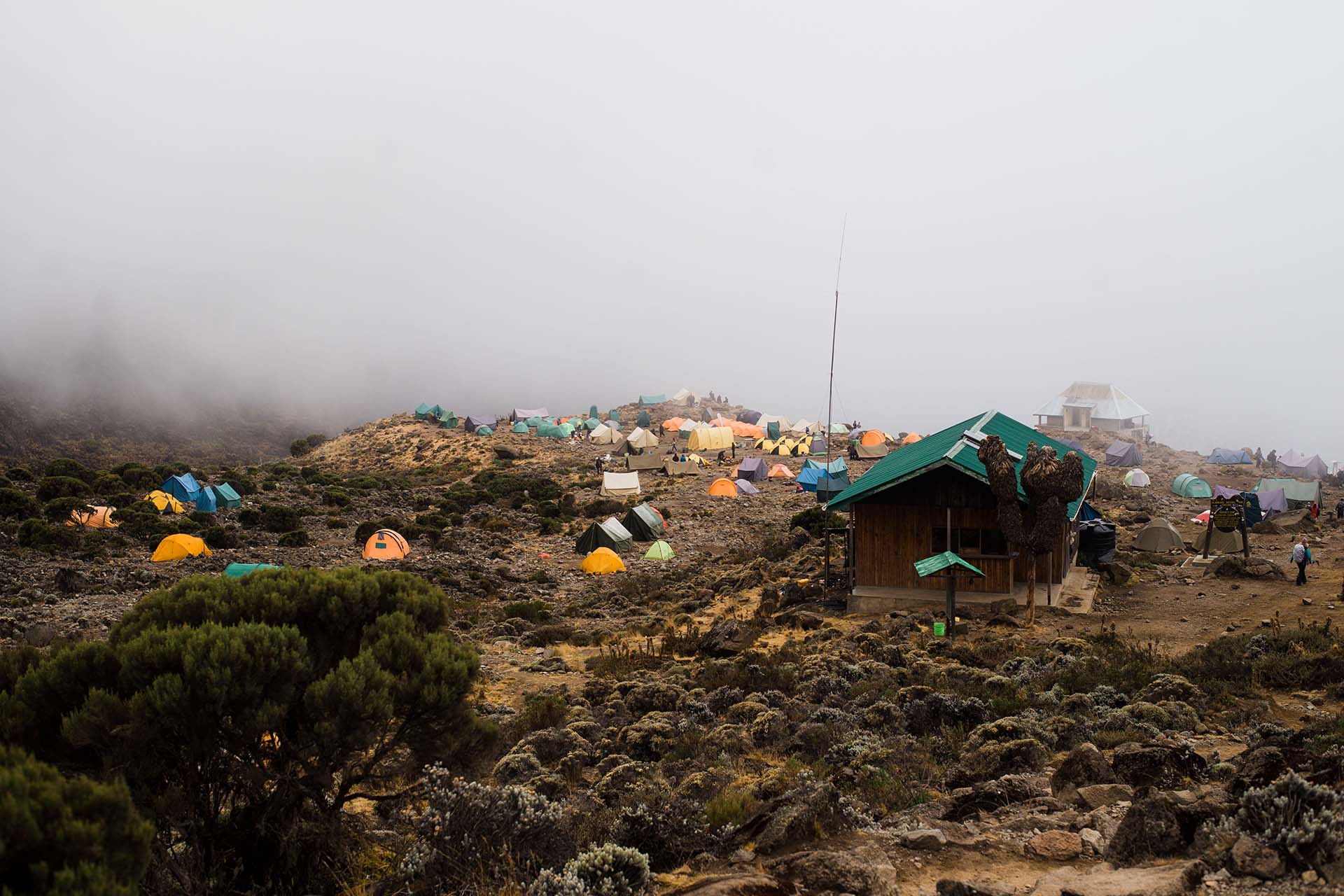
For routes such as Machame, Lemosho, Rongai, Northern Circuit, and Shira, accommodation is based entirely on camping. This is the most common and flexible form of overnight stay on the mountain.
Climbers sleep in dome tents provided by trekking companies, usually shared between two people. A separate dining tent is set up where meals are served and where climbers gather for briefing and relaxation.
Typical Camp Experience
Each campsite is strategically located to match altitude progression and acclimatization needs. Examples include:
- Machame Camp (2,835m) – First night on the Machame Route, located in rainforest terrain
- Shira Camp (3,850m) – Open moorland with wide views of the plateau
- Barranco Camp (3,976m) – Famous for its dramatic valley setting beneath the Barranco Wall
- Karanga Camp (4,035m) – A key acclimatization stop before summit preparation
- Barafu Camp (4,673m) – Final base camp before summit night ascent
- Mweka Camp (3,100m) – Final descent camp after summit success
Camping on Kilimanjaro is raw, immersive, and closely connected to nature. At night, temperatures can drop well below freezing, and climbers rely heavily on quality sleeping bags and layered clothing for survival and comfort.

What to Expect in Both Accommodation Types
Whether staying in huts or tents, accommodation on Kilimanjaro is guided by simplicity and functionality rather than luxury. There is no running hot water, electricity is limited or non-existent, and internet access is unavailable.
However, what you gain is far more valuable: an uninterrupted connection with nature, silence broken only by wind and wildlife, and a gradual transition through five ecological zones.
Meals are typically prepared by mountain chefs and served in communal settings. Porters carry all camping equipment, leaving climbers free to focus on the trek itself.
Choosing Between Huts and Camping
Your choice of accommodation is directly tied to the route you select:
- Marangu Route – Hut accommodation, slightly more sheltered, often considered less physically demanding in logistics
- All other routes – Camping, more immersive, scenic, and widely preferred for acclimatization and success rates
While huts may sound more comfortable, many experienced climbers prefer camping due to better acclimatization patterns and more scenic camping locations.
Final Thoughts
Accommodation on Mount Kilimanjaro is not about luxury—it is about adaptation. Whether you sleep in a wooden bunk at Horombo Hut or in a tent under the African sky at Barranco Camp, every night on the mountain brings you closer to one of the most extraordinary summits on Earth.
In the end, it is not the comfort of the stay that defines the experience, but the journey through it.